

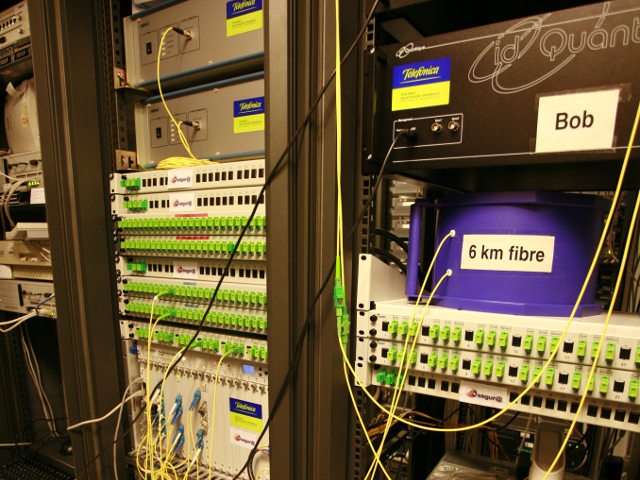


Quantum key distribution (QKD) is a physical technology that enables the secure generation of bit streams (keys) in two separated locations. This technology is designed to provide a solution for very secure (quantum-safe) key agreement, which is nowadays at risk due to advances in quantum computing.
Measures of centrality in networks defined by means of matrix algebra, like PageRank-type centralities, have been used for over 70 years. Recently, new extensions of PageRank have been formulated and may include a personalization (or teleportation) vector.
There is nowadays an increasing interest in discovering relationships among input variables (also called features) from data to provide better interpretability, which yield more confidence in the solution and provide novel insights about the nature of the problem at hand.
Accurate and precise measurement of the masses of galaxy clusters is key to deriving robust constraints on cosmological parameters. However, increasing evidence from observations confirms that X-ray masses obtained under the assumption of hydrostatic equilibrium might be underestimated, as previously predicted by cosmological simulations.
The constrained Hartree–Fock–Bogoliubov approximation, based on the recent parametrization D1M∗ of the Gogny energy density functional, is used to describe fission in 435 superheavy nuclei.
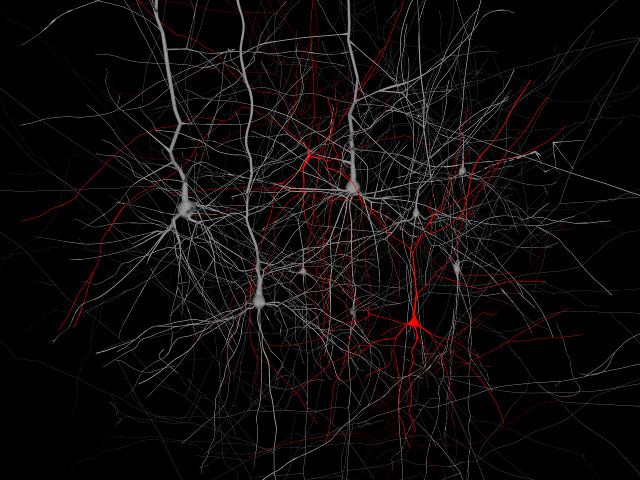
Neuronal damage, in the form of both brain and spinal cord injuries, is one of the major causes of disability and death in young adults worldwide. One way to assess the direct damage occurring after a mechanical insult is the simulation of the neuronal cells functional deficits following the mechanical event.