




In this publication the u-w finite strain formulation is enhanced with a Generalized Plasticity model for sands. The new model is numerically solved using an Optimal Transportation Meshfree approach that is best suited for numerical analysis at finite strains.
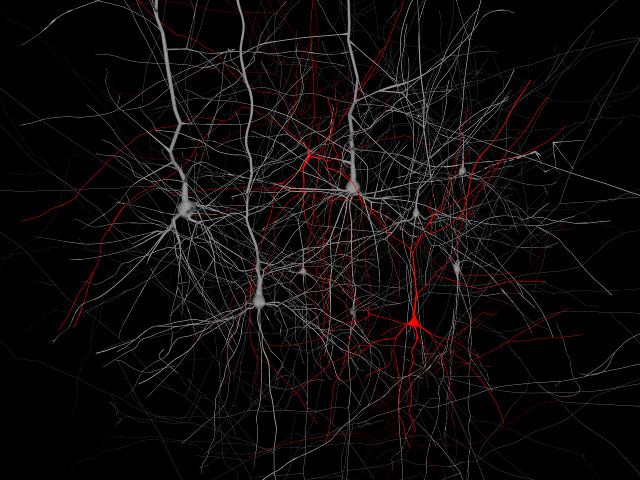
Computational modeling is becoming a widely used methodology in modern neuroscience. However, as the complexity of the phenomena under study increases, the analysis of the results emerging from the simulations concomitantly becomes more challenging.
Chronic diseases are becoming more widespread each year in developed countries, mainly due to increasing life expectancy. Among them, diabetes mellitus (DM) and essential hypertension (EH) are two of the most prevalent ones.
We develop an entropy stable two-phase incompressible Navier–Stokes/Cahn–Hilliard discontinuous Galerkin (DG) flow solver method. The model poses the Cahn-Hilliard equation as the phase field method, a skew-symmetric form of the momentum equation, and an artificial compressibility method to compute the pressure.
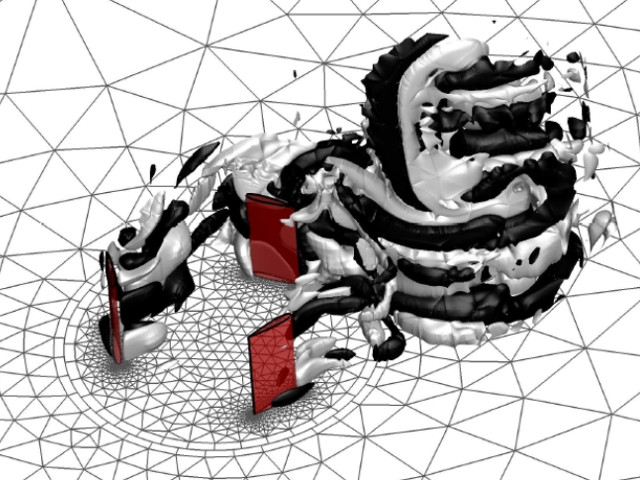
The presence of large surface irregularities such as humps, where the height is similar to the local boundary-layer (BL) displacement thickness, introduces regions of localized strong streamwise gradients in the base flow quantities. These large gradients can significantly modify the spatial development of incoming disturbances that lead to laminar–turbulent transition in wall-bounded flows.
Ultrasound transducer arrays are capable of producing tactile sensations on the hand, promising hands-free haptic interaction for virtual environments. However, controlling such an array with respect to reproducing a desired perceived interaction remains a challenging problem.