


Using the catalogues of galaxy clusters from The Three Hundred project, modelled with both hydrodynamic simulations (gadget-x and gadget-music), and semi-Analytical models (SAMs), we study the scatter and self-similarity of the profiles and distributions of the baryonic components of the clusters: The stellar and gas mass, metallicity, the stellar age, gas temperature, and the (specific) star formation rate.
The launch of the medium resolution Synthetic Aperture Radar (SAR) Sentinel-1 constellation in 2014 has allowed public and private organizations to introduce SAR interferometry (InSAR) products as a valuable option in their monitoring systems.
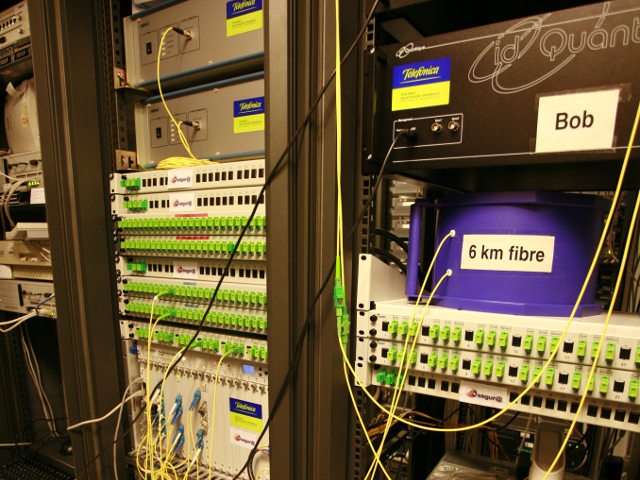
The Internet of Things is transforming our society by monitoring users and infrastructures’ behavior to enable new services that will improve life quality and resource management. These applications require a vast amount of localized information to be processed in real-time so, the deployment of new fog computing infrastructures that bring computing closer to the data sources is a major concern.
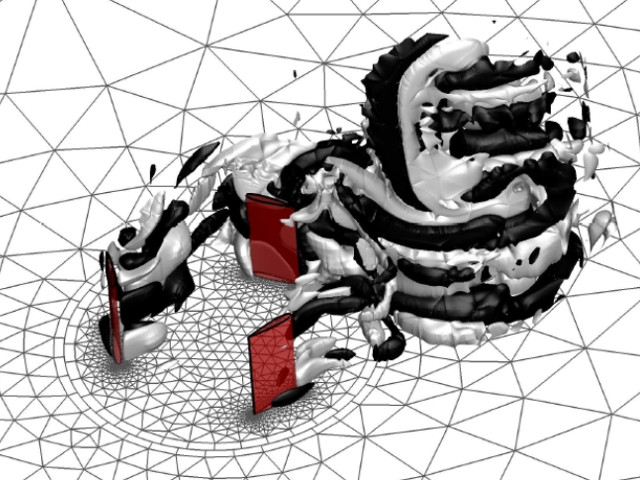
Dynamic Mode Decomposition (DMD) techniques have risen as prominent feature identification methods in the field of fluid dynamics. Any of the multiple variables of the DMD method allows to identify meaningful features from either experimental or numerical flow data on a data-driven manner. Performing a DMD analysis requires handling matrices V ϵ Rnp×N, where np and N are indicative of the spatial and temporal resolutions.
We compute the β-decay ft values within the frameworks of the energy density functional (EDF) and the interacting boson model (IBM). Based on the constrained mean-field calculation with the Gogny-D1M EDF, the IBM Hamiltonian for an even-even nucleus and essential ingredients of the interacting boson-fermion-fermion model (IBFFM) for describing the neighboring odd-odd nucleus are determined in a microscopic way.
Frank avalanche, which took place in Canada in 1903, is analyzed to understand the mechanisms involved in the processes of propagation using of advanced simulation tools allows to estimate the landslide propagation path, its velocity and the height of the deposits.