


We present a computational approach for designing CurveUps, curvy shells that form from an initially flat state. They consist of small rigid tiles that are tightly held together by two pre-stretched elastic sheets attached to them.
We propose a computational tool for designing Kirchhoff-Plateau Surfaces—planar rod networks embedded in pre-stretched fabric that deploy into complex, three-dimensional shapes. While Kirchhoff-Plateau Surfaces offer an intriguing and expressive design space, navigating this space is made difficult by the highly nonlinear nature of the underlying mechanical problem.
Radial axes plots are multivariate visualization techniques that extend scatterplots in order to represent high‐dimensional data as points on an observable display. Well‐known methods include star coordinates or principal component biplots, which represent data attributes as vectors that define axes, and produce linear dimensionality reduction mappings.
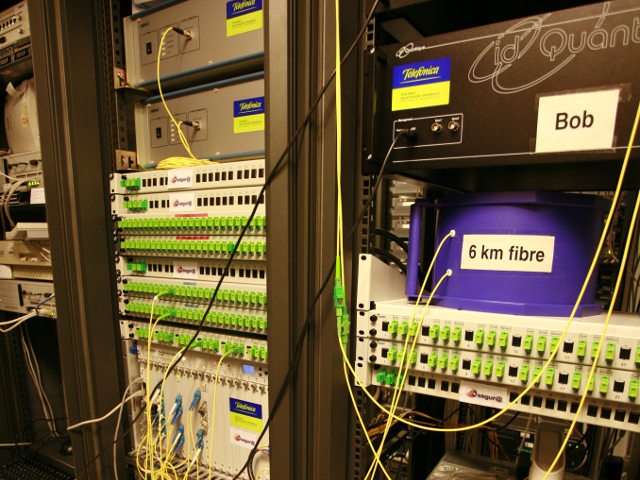
Quantum key distribution (QKD) is a novel technology that can be seen as a synchronized source of symmetric keys in two separated domains that is immune to any algorithmic cryptanalysis.
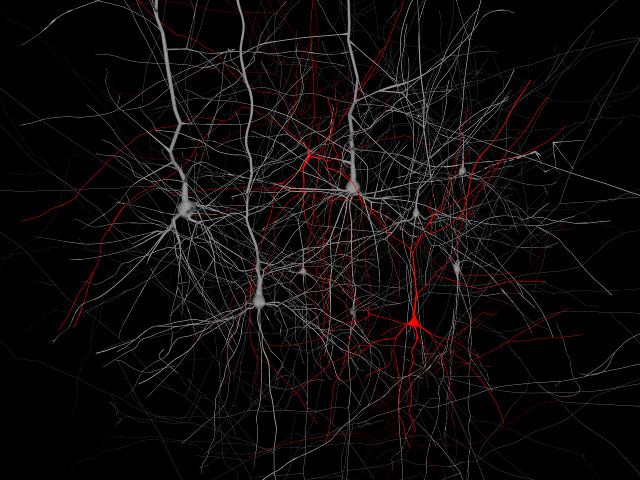
Gaining a better understanding of the human brain continues to be one of the greatest challenges for science, largely because of the overwhelming complexity of the brain and the difficulty of analyzing the features and behavior of dense neural networks.
In this study, a new approach is proposed and developed for evaluating the comprehensive outburst index (range between 0 and 100), which is a quantitative assessment approach and will enable us to better understand the risk degree of coal and gas outburst in coal mines.