
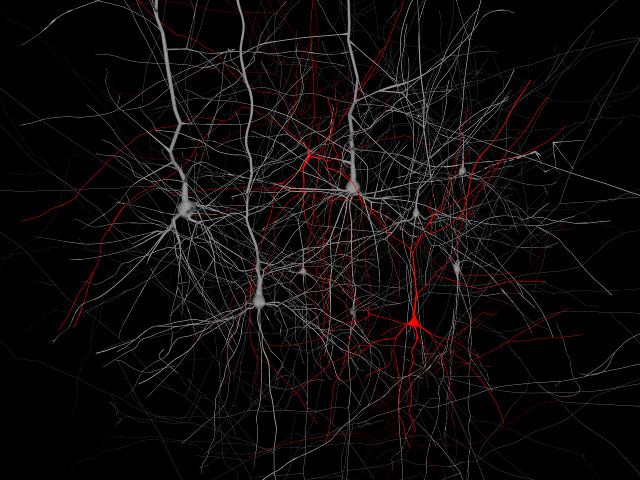




Primary progressive aphasia (PPA) is a clinical syndrome of neurodegenerative origin with 3 main variants: non-fluent, semantic, and logopenic. However, there is some controversy about the existence of additional subtypes.
This Special Section contains the five best papers originally submitted to the Spanish Conference on Computer Graphics (CEIG), 2019. The 29th edition of CEIG was organized by Vicomtech, and held in Donostia/San Sebastian (Spain), from June 26-28, 2019.
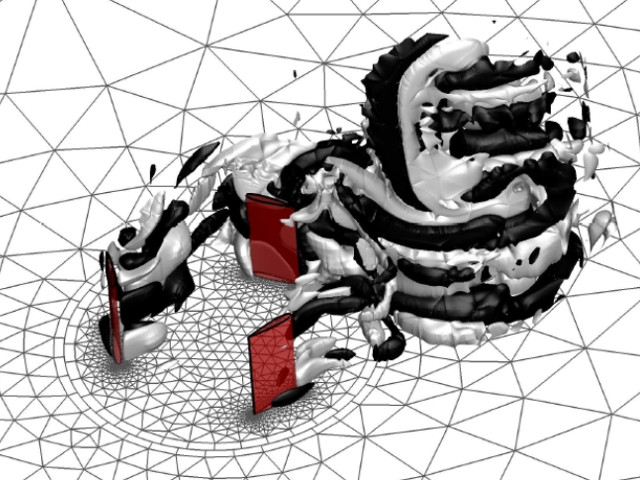
Classical depth‐integrated smoothed particle hydrodynamics (SPH) models for avalanches are extended in the present work to include a μ(I)− rheological model enriched with a fragmentation law. With this improvement, the basal friction becomes grain distribution dependent.
Deep Learning networks are revolutionizing both the academic and the industrial scenarios of information and communication technologies. Their theoretical maturity and the coexistence of large datasets with computational media is making this technology available to a wide community of makers and users, and recent evolution has been remarkable in techniques such as deep belief networks, Boltzmann machines, auto encoders, or recurrent networks.
The analysis of health and medical data is crucial for improving the diagnosis precision, treatments and prevention. In this field, machine learning techniques play a key role.
Television White Spaces (TVWS)-based cognitive radio systems can improve spectrum efficiency by facilitating opportunistic usage of television broadcasting spectrum by secondary users without interfering with primary users.