
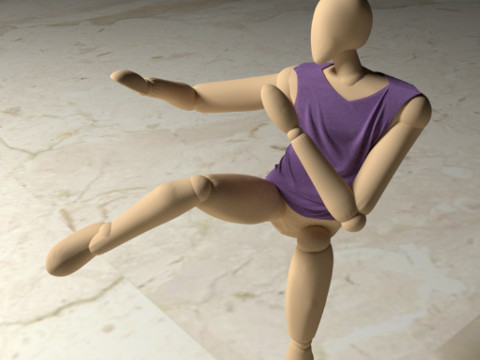



We present a novel method to enrich existing vertex-based human body models by adding soft-tissue dynamics. Our model learns to predict per-vertex 3D offsets, referred to as dynamic blendshapes, that reproduce nonlinear mesh deformation effects as a function of pose information.
Client knowledge remains a key strategic point in hospitality management. However, the role that can be played by large amounts of available information in the Customer Relationship Management (CRM) systems, when addressed by using emerging Big Data techniques for efficient client profiling, is still in its early stages.
Many indices have been proposed for cardiovascular risk stratification from electrocardiogram signal processing, still with limited use in clinical practice. We created a system integrating the clinical definition of cardiac risk subdomains from ECGs and the use of diverse signal processing techniques.
The intracardiac electrical activation maps are commonly used as a guide in the ablation of cardiac arrhythmias. The use of catheters with force sensors has been proposed in order to know if the electrode is in contact with the tissue during the registration of intracardiac electrograms (EGM).
Despite the wide literature on R-wave detection algorithms for ECG Holter recordings, the long-term monitoring applications are bringing new requirements, and it is not clear that the existing methods can be straightforwardly used in those scenarios.
We study novel three-dimensional gapped quantum phases of matter which support quasiparticles with restricted mobility, including immobile “fracton” excitations.