





Authors
Patricia Arroba ; José M. Moya ; José L. Ayala ; Rajkumar Buyya
Conference Paper
http://doi.org/10.1109/PACT.2015.59
Publisher URL
Publication date
March 2016
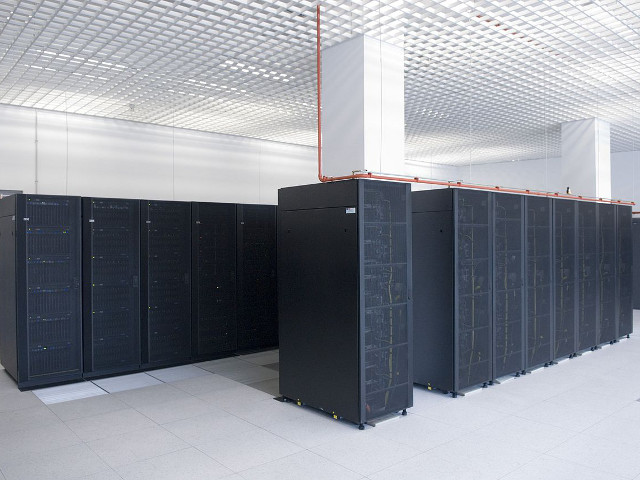
Nowadays, data centers consume about 2% of the worldwide energy production, originating more than 43 million tons of CO2 per year. Cloud providers need to implement an energy-efficient management of physical resources in order to meet the growing demand for their services and ensure minimal costs. From the application-framework viewpoint, Cloud workloads present additional restrictions as 24/7 availability, and SLA constraints among others. Also, workload variation impacts on the performance of two of the main strategies for energy-efficiency in Cloud data centers: Dynamic Voltage and Frequency Scaling (DVFS) and Consolidation. Our work proposes two contributions: 1) a DVFS policy that takes into account the trade-offs between energy consumption and performance degradation; 2) a novel consolidation algorithm that is aware of the frequency that would be necessary when allocating a Cloud workload in order to maintain QoS. Our results demonstrate that including DVFS awareness in workload management provides substantial energy savings of up to 39.14% for scenarios under dynamic workload conditions.