



Authors
Juan B. HernandoCarlos DueloVicente Martin
Conference Paper
https://doi.org/10.1007/978-3-319-12084-3_15
Publisher URL
Publication date
October 2014
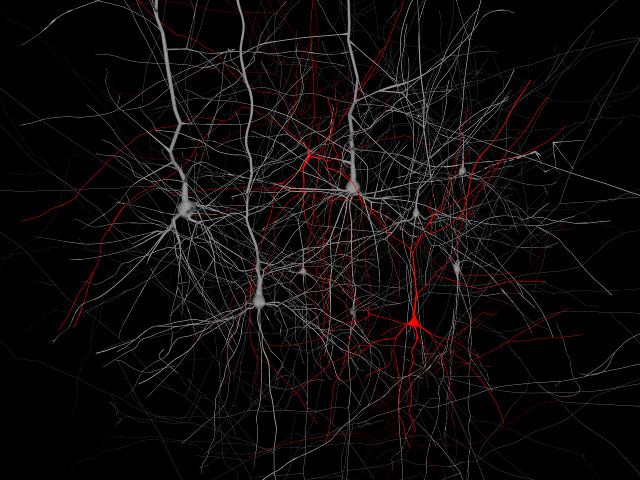
The widespread availability of modern infrastructures able to process large amounts of data and run sophisticated models of complex phenomena, is making simulation-based research a usual technique among the scientific tools. The impact of these techniques is so large, that they have been touted as the new paradigms for scientific discovery: the third, in relation to large-scale simulations, and fourth, in relation to data-intensive computing. In the traditional approach, the results of complex simulations are typically very large data sets that are later mined for knowledge. In a more dynamic approach, the user interacts with the simulation, steering it and visualizing the results in an exploratory way in order to gain knowledge. If this is properly done, it can not only make better use of the available resources, but also produce insight that would not be possible in a static, post-mortem analysis of the results. However, it is not easy to include live visualization and analysis in a workflow that has been designed to fit the available HW&SW infrastructure and to finish with a set of files for off-line study. This traditional process could very well turn into unfeasible if computing continues its way to a future limited by the storage capabilities, thus making impractical the storage for later analysis paradigm typical of today’s simulations. In this cases, having a scientist in the loop, aided by a set of analysis and data reduction techniques, will be necessary to understand the results and produce new science. The purpose of the present paper is to outline the main problems that have to be solved to visualize simulation results with an application to the Human Brain Project. The complexity and needs of present day visualization tools in this domain will be exemplified using RTNeuron, a code to represent neural activity in close to real time.